MICAELA FRANKLIN
Phone: 804-814-5211
Email: micky.franklin444@gmail.com


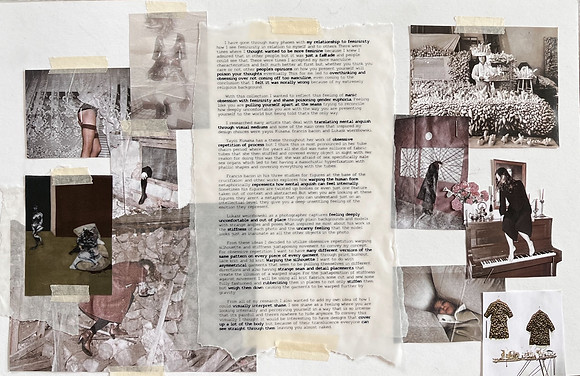

MOOD AND COLOR BOARDS
Full Sketchbook Flipthrough


Process:
Sketching and Draping
skecthing and collage section flipthrough


Sketching Process:
I started out my design process by collaging, doing some textile manipulations, and just sketching to get some ideas out.
When sketching I tried a few approaches: sketching as many half sized silhouettes as possible in a set time, using a wide tip marker to just focus on shape then refine and add detail with a pen, and focusing only on a certain details such as pockets or waistlines and then sketching a look around that.


Half -size speed sketches


Broad strokes with marker, then add detail


Details only, then taking those details and sketching around them


Draping Process:
I was very inspired by Rick Owens' and Junya Watanabe's patternmaking with jersey knits when I was draping for this collection. I wanted to capture their ability to create amazing structure with knitwear that still maintains the beauty of the fluidity of the fabric.
I wanted the drapes to convey the message of my collection by creating a sort of visual tension between the structural and fluid. To do this I draped thicker stiffer knits in more structural and more fluid ways, and then thinner stretchier jerseys in more structural and more fluid ways.


Fluid Draping
Structural Draping
Draping Section Flipthrough
Tracing the drapes
Making structural drapes more fluid looking
Making fluid drapes more structured
Some of my favorite drapes and traces:


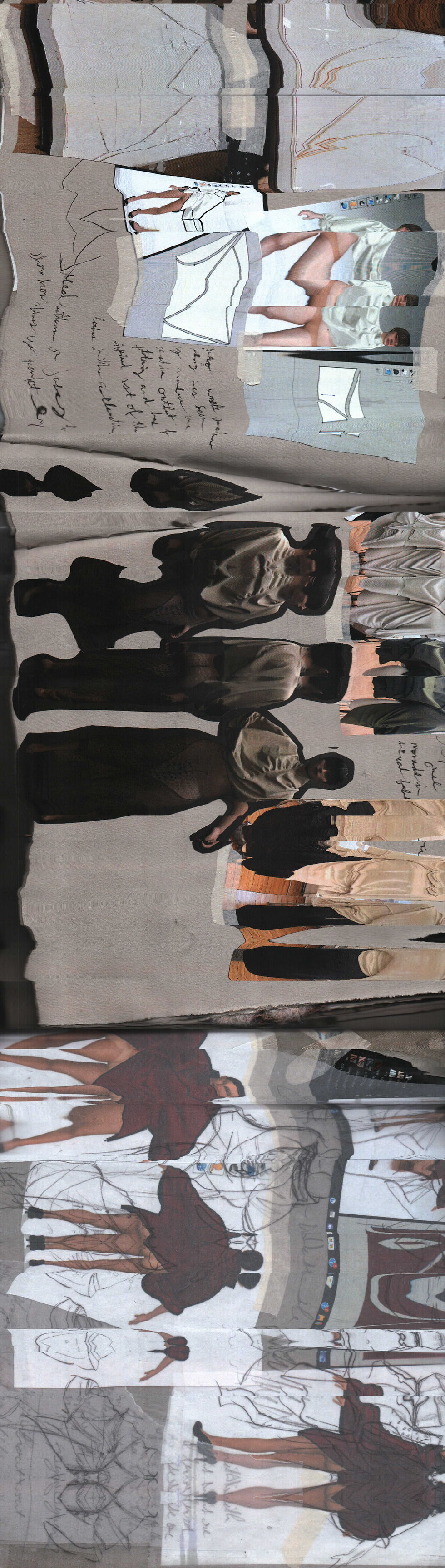
Zero Waste Draping Process:
To get even more abstract with my draping, I wanted to try taking a square of fabric, cutting it up into random pieces and then trying to sew those pieces back together in a way that resembled a garment. As a creative exercise this really helped me think outside of the box with my patternmaking in a way that I couldn't with traditional draping.
There was also the added bonus that all of these pieces would be zero-waste which is something I am passionate about. If a garment is going to be zero-waste though, I think the pattern should have a creative worth of its own regardless of the zero-waste aspect of it, so these experiments were perfect for me.
I started out draping with paper and scrap fabric. But then I realized CLO 3D would be the perfect tool to do tests in as I wouldn't be wasting any materials and I could adjust seams and placements infinitely and quickly.

Draping with Scrap Fabric


Draping with Paper

Animation of how the a zero waste garment is constructed


Textile Development :
Jersey Devore Development


Lace Knit Development:


Rubberized knit Development:


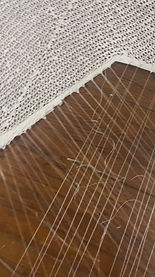
Pigment Recipe Tests
Setup for dripping the rubber
Cutting the tension strings once dry
Measuring pigment to mix into rubber


Full Process

Photoshoot and Lookbook:


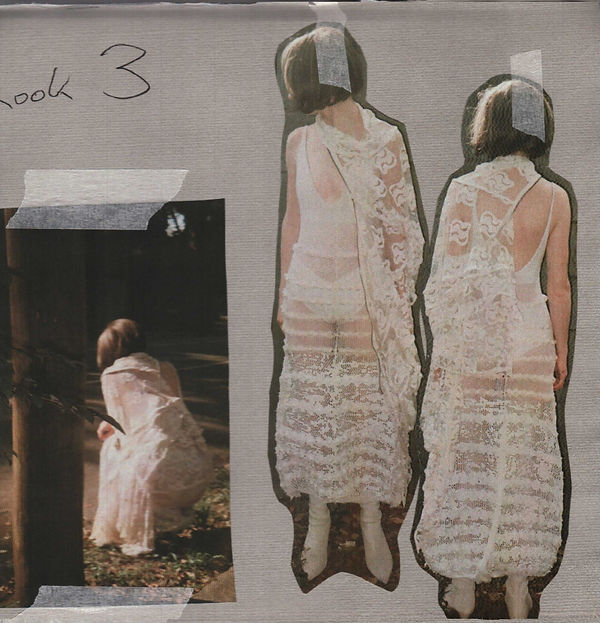


Look book :


Videos and
CLO-3D Renders:


